
 Login
Login Contact us
 Become a partner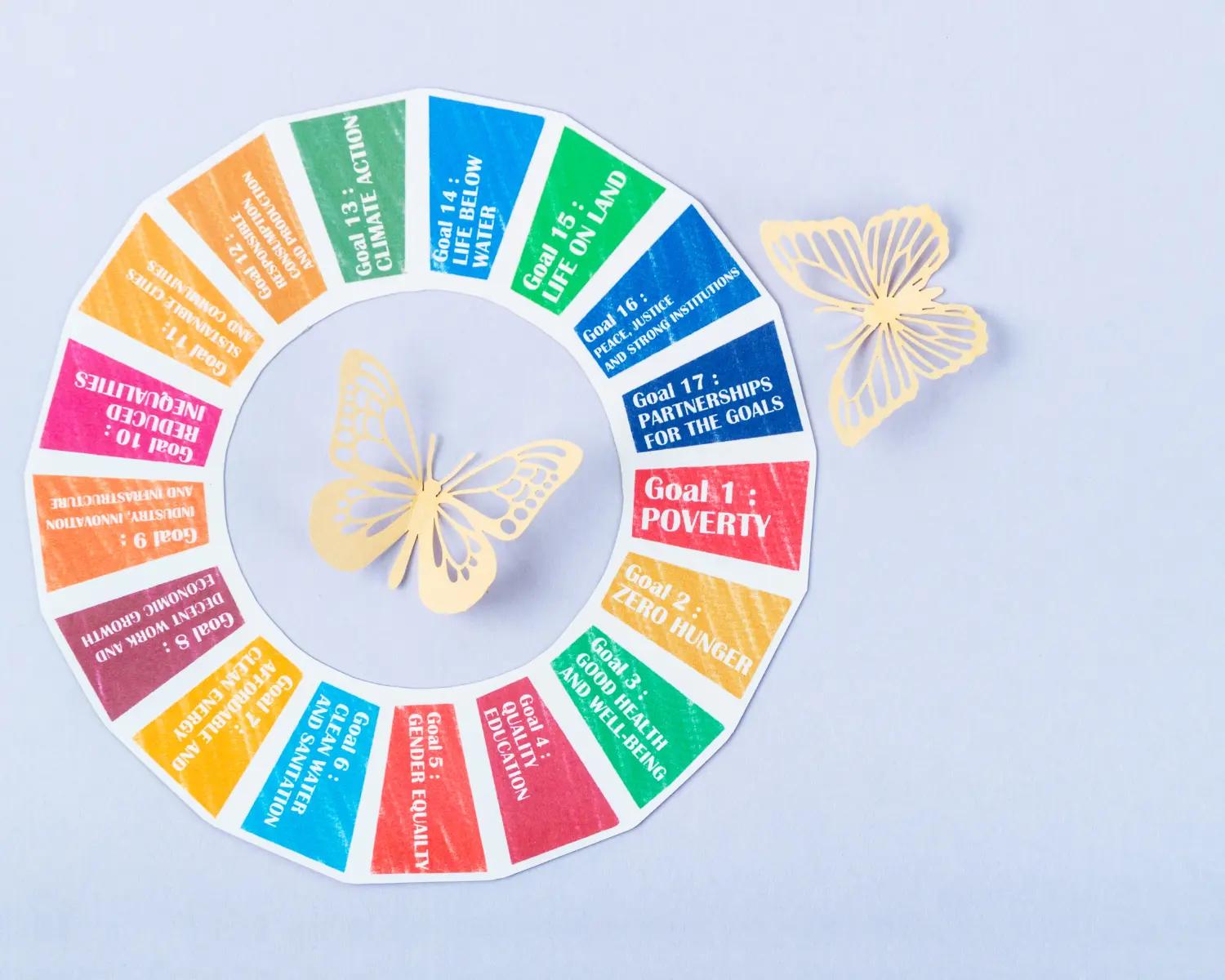
Sustainable Development Goals (SDGs): What the Sustainability Goals Mean for Companies
This overview tells you everything you need to know to put the Sustainable Development Goals (SDGs) into context for your company.
Sustainability: Licence to operate
Customers, employees, and other stakeholders are asking about the societal, social, and environmental impacts your business activities have. It is becoming increasingly clear that corporate sustainability is turning into a “license to operate.” ESG management therefore needs to be approached (more) strategically, or even for the very first time. This article explains how the Sustainable Development Goals, or SDGs, can help you do exactly that.
Whenever the implementation of sustainability in companies is discussed today, the United Nations Sustainable Development Goals (SDGs) are a firm part of the agenda. This framework helps to shape ESG management strategically within a company. At the outset, however, it is often unclear how the SDGs can actually be operationalized and integrated into a company’s sustainability strategy.
In this overview article, you will learn everything you need to know to put the Sustainable Development Goals (SDGs) into context for companies for the first time. We introduce the origins of the SDGs as well as the role companies play. Above all, though, we give you answers to one key question: How can your company become a proactive part of sustainable development? But let’s start at the beginning.
The history of the SDGs: From the Brundtland report to the 2030 agenda
The debate around the sustainable development of society, the economy, and the environment, which reached a broader public with the publication of the so-called Brundtland Report “Our Common Future” in 1987 (World Commission on Environment and Development), remains as relevant today as ever. Over several stages of development, the global objectives of this debate have found their way into the Sustainable Development Goals (SDGs) published by the United Nations.
Sustainable Development Goals today: Current status of the SDGs and their relationship to the CSRD
Adopted in 2015, the SDGs are now ten years old, and the midpoint assessment is weak. According to the Sustainable Development Report 2025 and the 2025 UN progress report, not a single one of the 17 goals is on track to be achieved globally by 2030. Fewer than one in five targets is on schedule. Progress is being made primarily on foundational issues such as health and access to electricity, while the structurally difficult goals are lagging behind.
For companies, the role of the SDGs has shifted during this period. Today they serve above all as an understandable, communicable framework: 17 goals, memorable icons, recognized worldwide. This makes them useful for putting your own sustainability work into context and telling its story, whether in reports, on your website, or in your strategy. This connection is still frequently seen.
Actual management, however, now runs through other instruments. The CSRD and ESRS, along with supply chain laws ranging from the LkSG to the CSDDD, the EUDR, and CBAM, now set the pace. These requirements are mandatory; the Sustainable Development Goals are not. Referencing the SDGs alone is therefore no longer a hallmark of a frontrunner. It has largely become standard, and without robust data to back it up, it quickly starts to look like greenwashing.
The SDGs after 2030: What comes next for the UN sustainability goals?
As the name suggests, the 2030 Agenda expires in 2030. This raises the question of what comes next, and the discussion about it has already begun. At the SDG Summit in September 2027, official negotiations on the post-2031 framework will begin, prepared in part by the Pact for the Future adopted in 2024.
A complete break is not to be expected. Most countries are sticking with the Sustainable Development Goals. What is more likely to be added are additional focus areas such as digital cooperation, the handling of artificial intelligence and data, or intergenerational equity. The SDGs are therefore more likely to be sharpened than replaced.
For companies, this changes little about the actual task at hand. Anyone who builds a clean data foundation and clear responsibilities now will also be well positioned for an adapted framework from 2031 onward. The effort pays off through robust ESG data, not through the SDG logo in a report.
SDGs and companies: What role the economy plays
This also establishes a framework that defines companies as important actors in sustainable development and offers them support in implementing measures at the regional and operational level. The SDGs emphasize the need for active participation by private companies and appeal to their creativity and innovation to create value for the common good. This includes, for example, reducing poverty, eradicating hunger, and protecting biodiversity.
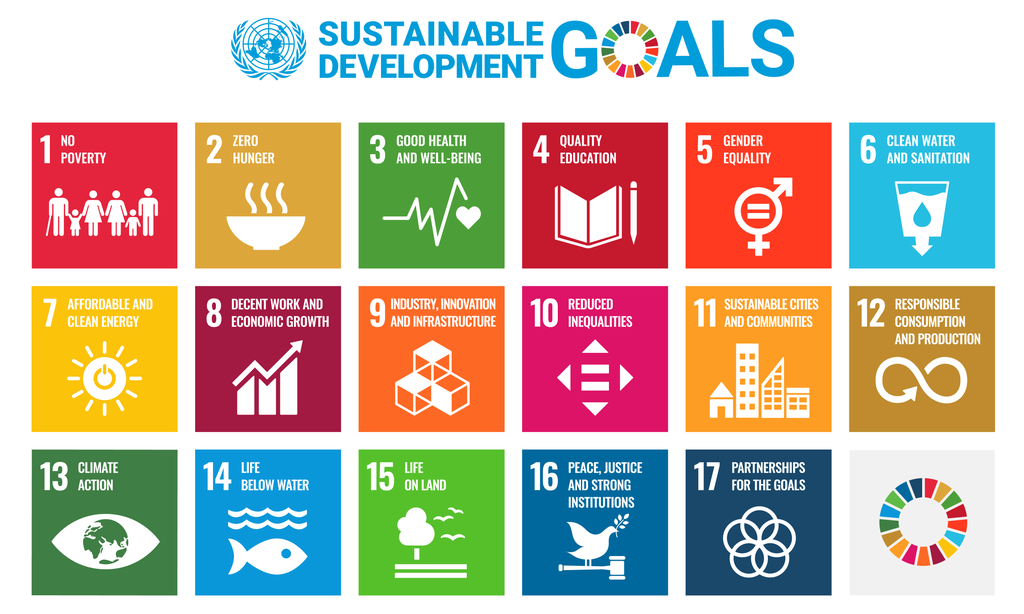
The United Nations 2030 Agenda and its 17 Sustainable Development Goals present companies with the new challenge of aligning their operations and strategies with the requirements of the SDGs.
Tackling the Sustainable Development Goals (SDGs) in your company
So what exactly do you need in order to meaningfully dedicate yourself to the Sustainable Development Goals and to sustainability in general? Two foundational pillars are decisive to begin with:
- Organizational and substantive responsibility assigned to an ESG/sustainability officer.
- A single place to consolidate all sustainability-relevant data.
Without these two basic prerequisites, it is virtually impossible for an organization to engage further with the topic.
But even with clear substantive responsibility and consolidated data, tackling the Sustainable Development Goals strategically is a task that should not be underestimated and that must be designed on a highly individual basis, depending on company size, industry, and stakeholders.
Consulting firms in the field of sustainability and sustainability reporting, including us here at VERSO, therefore support companies and ESG managers with practical advice every step of the way.
Implementing the Sustainable Development Goals (SDGs) with the GRI and the UN Global Compact
Various internationally recognized guidelines are available to achieve the implementation of the SDGs and their sub-targets within companies’ supply chains. Two of them:
Both guidelines propose indicators and key figures for measuring companies’ sustainability performance for each of the UN Sustainable Development Goals. Companies can therefore work toward implementing the global development goals by taking the route of adopting the GRI indicator system.
How seriously do companies really take the SDGs?
Some companies already integrate the SDGs deeply into their sustainability strategy and underpin them with concrete indicators and data. For many others, the connection remains superficial. This commitment is usually related to a company’s commitment to other sustainability-related topics, as well as to its size and level of sustainability maturity.
From this, one can conclude that commitment to the Sustainable Development Goals stems partly from regulatory reasons, where existing laws are simply being followed. On the other hand, there are often institutional reasons behind such commitment. A qualitative review of individual sustainability reports shows that company participation is largely symbolic and not yet substantial. This suggests that many companies regard the SDGs—much like the Global Compact—as a framework with non-binding implications.
Conclusion: Why the Sustainable Development Goals remain a useful tool
Despite all the shift toward the CSRD and the like, the SDGs have not lost their value. They give sustainability work a tangible framework, help with prioritization, and create a common language for explaining commitment both internally and externally. That is precisely what they are still good for.
What they do not provide is binding management. That requires robust data, clear responsibilities, and the appropriate reporting standards. Anyone who combines the two—the Sustainable Development Goals as orientation and solid ESG data as a foundation—turns sustainability into more than a box-ticking exercise. And is prepared for what comes after 2030.
* This information is summarized editorial content and should not be construed as legal advice. VERSO accepts no liability.
This might be also interesting for you:

Subscribe to our newsletter!
Sign up and receive regular news about:
- Current ESG topics and legislative changes
- Individual advice from the VERSO experts
- News about VERSO
- Sustainability Events and more